Ca

Camino de Santiago Menu

Cycling Walking

French Way
Camino Frances
Camino Frances 1 Camino Frances 2 Camino Frances 3 Camino Frances 4 Camino Frances 5 Camino Frances 6 Camino Frances 7Camino Frances 8

Northern Way
Camino del Norte
Camino Norte 1 Camino Frances 2 Camino Frances 3 Camino Frances 4

Original Way
Camino Primitivo
Camino primitivo 1 Camino Frances 2

Aragonese Way
Camino Aragones
Camino Aragones

English Way
Camino Ingles
Camino Ingles

Fisterra Way
Camino Finisterre
Camino Fisterra

Portuguese Way
Camino Portugues
Camino Portugues Camino Portugues Camino Portugues Camino Portugues Camino Portugues

Via de la Plata
Camino Via de la Plata
Camino Plata Camino Plata Camino Plata Camino PlataCamino Plata Camino Plata Camino Plata Camino Plata Camino Plata Camino Plata

Le Puy Way
Camino Le Puy
Camino Le Puy Scallop 1 Camino Le Puy Scallop 2 Camino Le Puy Scallop 3 Camino Le Puy Scallop 4 Camino Le Puy Scallop 5 Camino Le Puy Scallop 6

Responsible Camino Walking Camino Rustic

Camino Rustic France Scallop French Way
Camino Rustic Fisterra Scallop
Finisterre Way
Camino Rustic Plata Scallop Via de la Plata
Camino Rustic Portugues Scallop Portuguese Way
Camino Original Way

Responsible Camino Walking ShortBreaks

Easy DAys Walking Easy Days

Cycling Cycling

French Way By Bike
Camino Frances by Bike
Camino France By Bike 1 Camino France By Bike 2 Camino France By Bike 3


Banner Santiago de Compostela Camino Home page camino Booking

CyclingCyclingResponsible CaminoResponsible CaminoEasy DAys

Cycling

northern way / Camino del norte

Camino Norte

8 sections

Camino Norte

Camino Norte 1Northern Way Section 1

Walk From San Sebastian to Bilbao - 133km
8 Days/7 Nights, Half Board, hotels en-suite, year round

Camino Norte Camino Frances 2Northern Way Section 2

Walk From Bilbao to Santander - 108km
7 Days/6 Nights, Half Board, hotels en-suite, year round

Camino Norte Camino Frances 3Northern Way Section 3

From Santander to Ribadesella - 145km
8 Days/7 Nights, Half Board, hotels en-suite, year round

Camino Norte Camino Frances 4Northern Way Section 4

Walk From Ribadesella to Oviedo - 99km
6 Days/5 Nights, Half Board, hotels en-suite, year round


Information

The origins of the pilgrimage way to Santiago, which runs along the northern coasts of Galicia and Asturias date back to the period immediately following the discovery of the tomb of Saint James the Apostle around 820 AD. The routes from the old Kingdom of Asturias were the first to take the pilgrims to Santiago. The coastal route was as busy as other, older ways, long before the Spanish monarchs proclaimed the French Way to be the ideal route, and provided a link for the Christian kingdoms in the north of the Iberian Peninsula. This endorsement of the French Way did not, however, bring about the decline of the Asturian and Galician pilgrimage routes, indeed the stretch from Leon to Oviedo enjoyed even greater popularity from the late 11th century onwards.

The Northern Way was not only used by the Asturians living along the shoreline. This medieval route also gave pilgrims access to the sanctuaries of Oviedo and Santiago de Compostela. Although perhaps not as well-travelled as the French Way, the Northern Way was certainly bustling with activity until the 18th century. These pilgrims came by land from France or by sea from Northern Europe to the ports of the Basque Country and Cantabria, before setting out on their journey towards the sanctuary of San Salvador of Oviedo and the cathedral of Santiago.

Once they reached Castropol, the pilgrims either had to cross the "ria" (inlet) of Ribadeo by boat, or travel along the right bank of the estuary to the bridge of Santiago de Abres, where they would enter Galicia. Contemporary pilgrims have had their journey simplified by the construction of a bridge linking Asturias and Ribadeo.

From the entry point in Galicia, the pilgrimage route is well-documented; it started out from the town of Ribadeo, which also had a port used by pilgrims, before continuing inland through the valleys of Vilanova de Lourenza and Mondoriedo, and thereafter crossing the high flatlands of Vilalba and Guitiriz. At the Monastery of Sobrado dos Monxes, just before the route joined with the French Way in Arzua, the pilgrims received the hospitality of the monks. Just a few days' travelling would finally bring them to Santiago and the tomb of the Apostle.

Among the thousands of pilgrims who travelled to Santiago via the Northern Way, one figure who stands out is Saint Francis of Assisi. Reports suggest that he made the pilgrimage to San Salvador in Oviedo and Santiago de Compostela in 1214. In the late 15th century, the Armenian Bishop Martyr of Azerbaijan made a pilgrimage to Rome and Santiago using the Northern Way, which passed through the Basque Country, Cantabria, Asturias and Galicia. There are two chronicles dating from the 16th century recorded by pilgrims who travelled a similar route – Antonio Lalaing, Lord of Montigny (1502), and the Italian pilgrim, Bartolommeo Fontana (1539).

During the Baroque period, the Northern Way was used by many pilgrims who opted to chronicle their experiences and itineraries. Jakub Sobieski (1611), the father of King John III Sobieski of Poland, made the pilgrimage via the French Way to Leon. He took a detour to Oviedo and proceeded along the coastal route to Ribadeo before continuing onto Santiago along the Northern Way. Another Italian pilgrim, Sebastian Gatti reached Ribadeo by sea in 1698 and continued his journey on foot arriving in Santiago via the same route. In 1726 the French pilgrim, Guillermo Manier and his fellow pilgrims chose the Northern Way to make the journey back to France. In 1790 the Frenchman, Jean Pierre Racq wrote a detailed account of his pilgrimage to San Salvador in Oviedo and to Santiago de Compostela via the Northern Way.

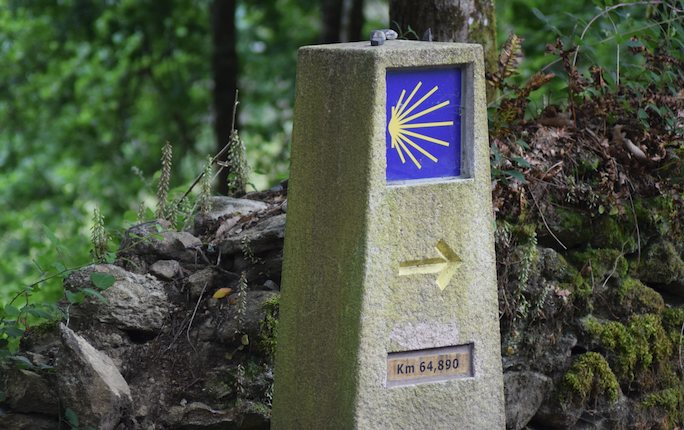
The Galician stretch of this Way covers 170 kilometres between Ribadeo and Santiago and is clearly signposted with stones decorated with a ceramic scallop shell and a vital piece of information for pilgrims – their exact location on the Way. In addition to the famous yellow arrow of the Associations of the Friends of the Way, these milestones make it easy for the pilgrims to find their direction, as they appear in strategic locations such as at crossroads and turn-offs.

Stages of the camino Norte

This is the list of the sections and stages of our Walking holidays on the Camino Norte (Nortern Way). Click on the Camino section to go directly to the walking holiday.

Day Date Town   Km to ... Meals
1 02-Feb San Sebastian  Make your own way to the hotel - B&B
2 03-Feb Getaria  Walk 27 Half Board
3 04-Feb Deba  Walk 22 Half Board
4 05-Feb Markina  Walk 20 Half Board
5 06-Feb Gernika  Walk 28 Half Board
6 07-Feb Lezama  Walk 21 Half Board
7 08-Feb Bilbao  Walk 15 B&B
8 09-Feb Portugalete  Walk 14 Half Board
9 10-Feb Castro Urdiales Walk 27 Half Board
10 11-Feb Laredo  Walk 24 Half Board
11 12-Feb Escalante  Walk 16 Half Board
12 13-Feb Santander  Walk 27 B&B
13 14-Feb Arce  Walk 16 Half Board
14 15-Feb Santillana del Mar Walk 27 Half Board
15 16-Feb Comillas  Walk 23 Half Board
16 17-Feb Unquera  Walk 27 Half Board
17 18-Feb Llanes  Walk 23 Half Board
18 19-Feb Ribadesella  walk 29 B&B
19 20-Feb Colunga  Walk 24 Half Board
20 21-Feb Villaviciosa  Walk 30 Half Board
21 22-Feb Pola de Siero Walk 28 Half Board
22 23-Feb Oviedo  Walk 17 Half Board
23 24-Feb End of the holiday Make your own way to the the aiport - -


Back to home Page


One Foot Abroad Follow The Camino on facebook Follow The Camino on Twitter
info@followthecamino.com - T&C - Privacy Policy - Contact Us- Sitemap - © 2010 Follow The Camino